The belt is one of many things that both women and men use daily. It’s an accessory that serves many purposes. One can say it's universal. For now, I only know of few things that that belts are used for. One of the obvious purposes of the belt is to hold our pants in position. For women, mostly is to show an hourglass figure or to complement whatever outfit they might be dressed in. Another reason can be to look formal. Belts are also used by handymen, policemen and by superheroes like Batman.
They use belts to hold their tools and weapons that assist them in their occupation. A belt is also used in many other places for various tasks. For example, cars need belts to operate. Belts help pully-systems in cars and other machines to work smoothly.
A belt is an obvious object concerning clothing or fashion. It can be seen and found almost anywhere either in clothing stores, on the streets and in our homes. I could not help but think about how versatile the belt is. This is the reason I decided to discuss this object, the belt. In this blog, I will explore the different uses and history of the belt in its multiple forms, its symbolism and other things that concern the belt.
There are many ideas and concepts associated with the belt. One of the most obvious concepts or ideas associated with the belt is fashion. Belts in fashion are made in various shapes and sizes for both men and women. It cannot be clearly pointed to when mankind started using belts, because since a string is also another meaning of a belt, it may happen that during those days it was used to perform the very same duties of what we know as a belt today. Below is an image of a men's belt in the early 1920s.
They use belts to hold their tools and weapons that assist them in their occupation. A belt is also used in many other places for various tasks. For example, cars need belts to operate. Belts help pully-systems in cars and other machines to work smoothly.
A belt is an obvious object concerning clothing or fashion. It can be seen and found almost anywhere either in clothing stores, on the streets and in our homes. I could not help but think about how versatile the belt is. This is the reason I decided to discuss this object, the belt. In this blog, I will explore the different uses and history of the belt in its multiple forms, its symbolism and other things that concern the belt.
A straight and plain definition of the belt is an object made from flexible material that connects or binds one end to the other. According to the dictionary a belt is "a strip of flexible material worn especially around the waist as an item of clothing or a means of carrying something (as tools) a similar article worn as a corset or for protection or safety or as a symbol of distinction, continuous band of tough flexible material for transmitting motion and power or conveying materials" (Webster, 2017). An area characterized by some distinctive feature (as of culture, habitation, geology, or life forms). thus the belt is also described as a string, ribbon, ring, strap, cincture, cummerbund, girdle, sash and waistband (Thesaurus, 20113).

Figure 3 In terms of clothing, a belt is regarded more as a fundamental element to one's outfit. Thus the belt tends to be classified as a fashion accessory and may also be considered as a costume jewelry due to its decorative nature (sauce).- The belt on the left gives visual evidence as to why belts are considered as outfit jewelry. This belt, in particular, was made from leather and has decorative elements on both buckle and the belt itself. Besides from its main purpose to keep your outfit in place, a belt served a role of completing an outfit (sauce). Another well-knowing concept or idea associated with the "belt" is discipline. This is also known as spanking, whooping and beating. The belt has been associated with the concept of discipline for many years. The belt as a form of discipline is even depicted in movies and cartoons. Figure 4 is a famous American animation series called "Boondock" and depicts the concept of using a belt as a form of discipline. The character holding the belt is Robert Jebediah Freeman, also know as Grandad. In this series, he's a guardian of two young brothers who moved from their birthplace to live with their grandfather.
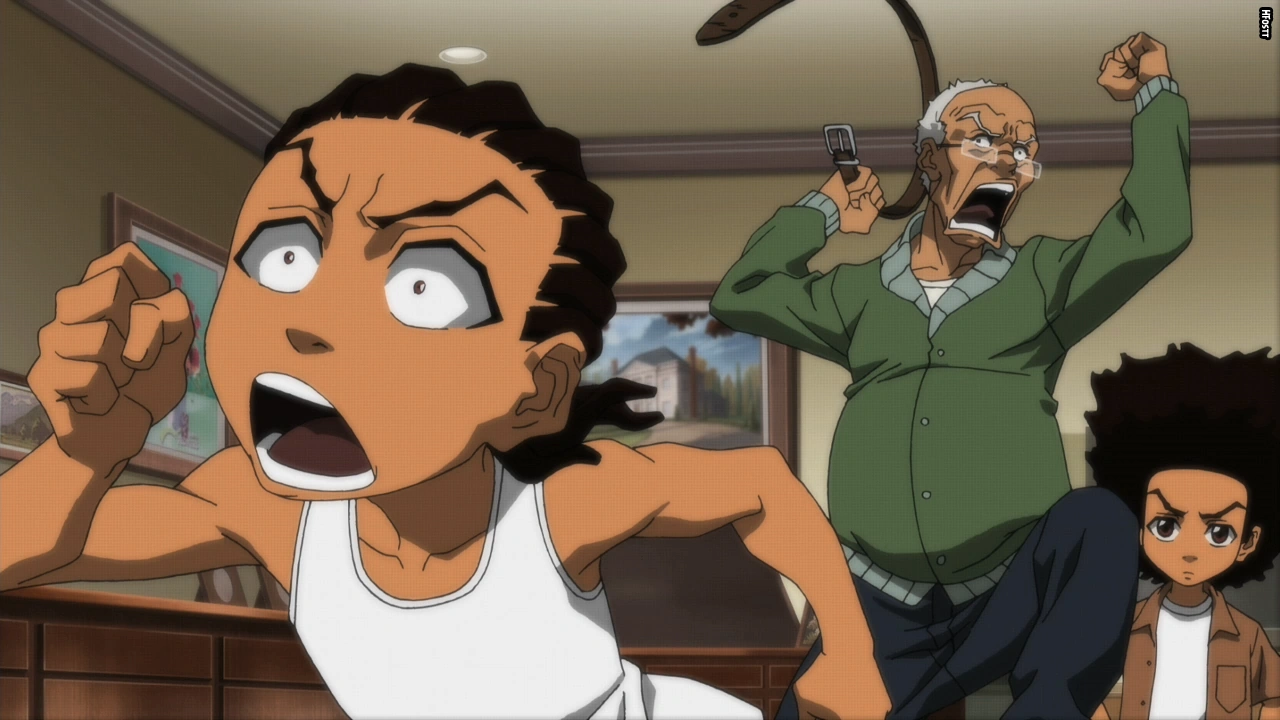
Figure 4
- The character running from the belt is known as Riley. In this series, Riley is depicted as a typical stereotype of young boys who grew up downtown or the "Hood", therefore Riley is very handful and gets himself into trouble most of the time. Hens Grandad lashes out his belt in an attempt to discipline his grandson (sauce).
The image in figure 4 represents the typical racial stereotype of how many races and cultures particularly African or African American cultures associate the belt with the concept of discipline in their children. This is formally known as corporal punishment. Other terms associated with this phenomenon are scourging, beating and flogging.
-
Flogging, on the other hand, refers to a more brutal form of punishment and by some, It is likely to be seen as a form of torture. According to Geoffrey Abbott (2010), flogging is a beating administered with a whip or rod, with blows commonly directed to the person’s back. It was imposed as a form of judicial punishment and as a means of maintaining discipline in schools, prisons, military forces, and private homes.

Figure 5
Figure 5 is an image of a woman in the predominantly Muslim city of Banda Aceh, Indon., undergoing a caning. Flogging can be executed with various tools such as sticks, rods, straps, whips, and other objects. another instrument used for this event is a cat-o’-nine tails. It is practically a set of nine knotted cords or thongs of rawhide attached to handle that works to hold everything together.
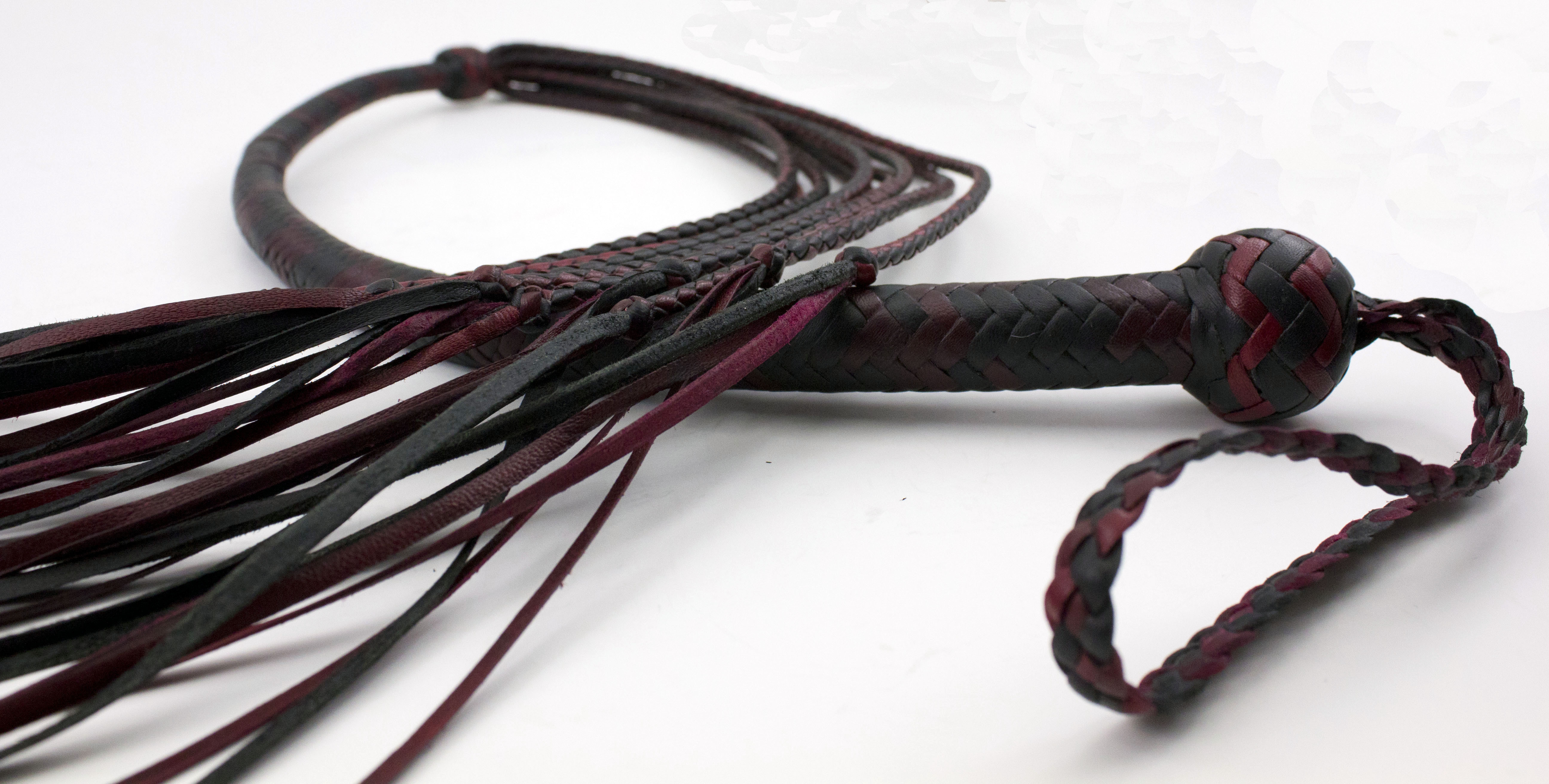
Figure 6
Figure 6 is an example of a cat-0'-nine tails. This instrument is similar to the what the Romans used in a process of punishment known as scourging. Scourging consisted of a handle with three lashes or thongs of leather or cord, sometimes with pieces of metal fastened to them.
Besides the purpose to cause pain, this instrument has other uses. The cat-o'-nine tails is also used as a means of 4play. The instrument in figure 7 looks similar to the one above but looks kinkier. It serves as a means of sexual pleasure for BDSM practitioners. BDSM refers to bondage-discipline, dominance-submission, sadism-masochism- (source).
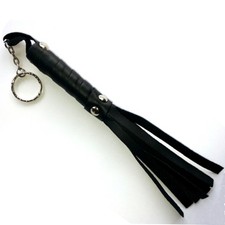
Figure 7
The cat-o'-nine-tail was a lethal weapon used for punishment, but serious injuries or even death depending on how many times you were sentenced to be flogged. In this case, the cat-o'-nine-tails, shortened to be "the cat' in figure 7 is not used to inflict serious injuries. It's designed for pleasure in the bedroom. It's usually found at adult stores (source).
The belt is also associated with the concept of identity in terms ranking according to knowledge and skills. This is evident in martial arts. Martial arts refers to various forms of training in connection to combat. These forms or styles are designed for the sole purpose of self-defense and defeating your opponent. Within these fighting styles, there are ways of identifying hierarchy from various levels(source).
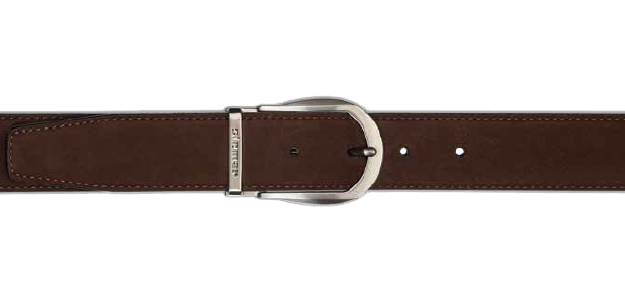


Besides all the research presented above, the belt can also be seen as a canvas. A functional canvas. Dukes finest artisan is a designer brand with a unique heritage. Dukes finest artisan started with Ursula and Michael Herzog importing original vintage-Tshirts from L.A to Europe in 2001. They loved restoring and refining old and special things. This leads them to the discovery of 30 years old military belts. This then drove them to restore these belts and creatively refining them. They started the first Dukes finest artisan collection in their living room August 2008, which consisted of ten hand-painted belts. The image of belts on the left is an example of what they produce.
Career and Character profile (Dukes Finest Artisan)
Together with their distinctive skills, Dukes Finest Artisan has been set up for itself a respectable reputation. Their vision and agenda are to create an iconic brand that produces things rarely found anywhere else. A brand that takes what is old and transforms it into something interesting. Dukes Finest Artisan is inspired and influenced by ethnic and historical ages.
They also have a personal approach to towards their work. Since they have started, upcycling has been an integral part of their collection. From what they have done, it can be said that they have a strong stance in taking what’s old and transforming it into something precious.
Their upcycling-collection consists of passionately restored and exclusive range of unique leather that is up to 30 years old. They use original and used leather which comes from a global network of vintage enthusiasts, from Los Angeles to Budapest. They use precious pieces, selected mainly from old stock and vintage markets which are then cleaned and treated with natural oils and lotions.
Product research
So far in my research, I have not come across a song that refers directly to the belt. In terms of its physical and symbolic state or in a way where one of the verses of the song includes the word “belt”.
Justin Timberlake’s song, “What Goes Around...Comes Around” reflects more to the belt. It does not include the word in its lyrics but relates more to the kind of principles the belt possess. A belt Is an object that covers one end to another. It’s a loop object. It ends where it began. Bellow is the is Justin Timberlake music video "What goes around...Comes around" (YouTube link).
Product

The picture above is an image of a CD cover which I designed. I used reference material such as CD cover templates and digital artworks which had a similar reference to the belt. The CD cover had to relate not only to the topic but to the song too. The song refers to karma. While the belt in most cases refers to discipline. This was the link between this song and the topic. Karma can be seen as a form of discipline.
Comments
Post a Comment